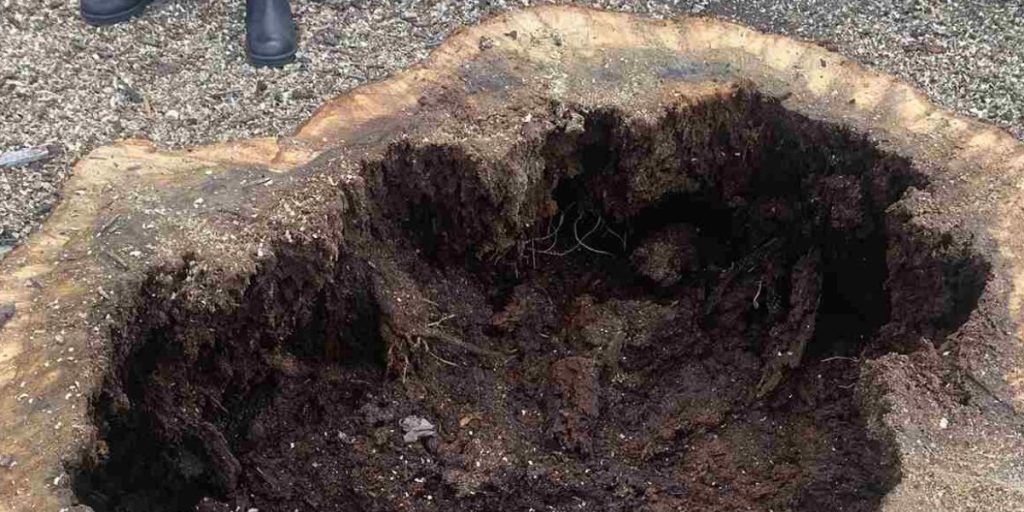
Your backyard tree might look perfectly fine on the outside, but the trunk could be hiding a serious problem within its core. Internal rot weakens trees from the inside out. By the time you notice obvious damage, the tree may already pose a safety hazard.
If you’re searching for trustworthy tree services in Phoenix, Elite Tree Service can help you spot trouble before it becomes dangerous. Our post will walk you through how to tell if a tree is rotten inside and when to call a professional. Knowing the symptoms early can protect your tree, your property, and even your safety.
Why Internal Tree Rot Is a Hidden Danger
Heart rot is a slow disease that can take years or even decades to destroy a tree’s interior. The outer bark often looks healthy even when the inside is crumbling away.
This slow deterioration is what makes internal decay so risky for homeowners. A tree that appears strong can suddenly snap or fall during a storm, which is especially dangerous if it sits near your home, driveway, or power lines.
Common tree diseases spread through wounds, broken branches, or insect damage, leading to internal rot. Catching the issue early may improve the chances of managing the problem before removal becomes necessary. Spotting these subtle clues early is essential when learning the signs that the tree is dying before the damage becomes irreversible. Proactive care, including the regular importance of tree trimming, can help prevent these structural weaknesses from developing in the first place.
Visible Warning Signs of a Rotting Tree
Learning how to tell if a tree is rotten inside starts with knowing the outward clues. While some signs are subtle, others stand out clearly once you know what to look for.
Watch for these red flags on any tree in your yard:
- Mushrooms or shelf fungi: Fungal growth on the trunk or near the base of the tree often signals that the wood inside is already breaking down.
- Peeling bark: Large sections of loose, missing, or flaking bark expose the tree to pests and disease, creating a long list of problems.
- Trunk cavities: Open holes or soft spots in the wood may indicate weakened structural integrity.
- Dead branches: Bare limbs during the growing season or branches that snap easily point to rot moving outward from the core.
- Sudden leaning: A tree tilting more than 15 degrees may have root rot weakening its base.
In severe cases where the root system completely gives way, homeowners often wonder if an uprooted tree can be saved or if immediate removal is required. If you spot any of these issues, take a closer look at the rest of the tree. One symptom rarely shows up alone.
How Arborists Confirm Decay Inside a Tree
A trained arborist uses specific tools and techniques to figure out if a tree is rotten inside without guessing. The most common method is a drill test using an increment borer, which pulls a small core sample from the trunk.
Healthy wood looks firm and evenly colored. Soft, crumbly, or discolored samples confirm the presence of decayed wood.
Beyond the drill test, arborists also check for these clues during a full inspection:
- Fine sawdust at the base: Also called frass, this material suggests wood-boring insects are tunneling through weakened areas.
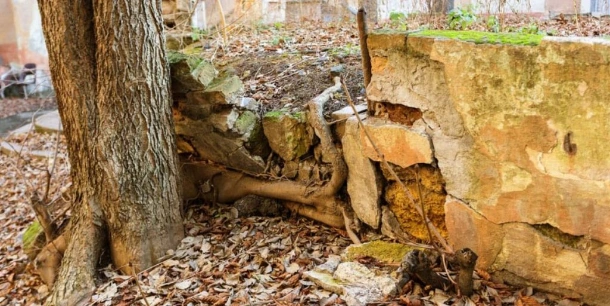
- Open wounds: Large gashes or cracks let fungi and bacteria enter the tree’s core.
- Stunted growth: A tree with sparse leaves or slow growth may be struggling to move nutrients through its damaged system.
- Uprooting soil: Ground lifting around the base suggests that the roots are failing.
No single clue tells the whole story, so professionals weigh several factors together before reaching a conclusion. Combining these observations with a hands-on inspection gives you the most accurate picture of the tree’s true condition.
When a Hollow Trunk Means Trouble
A hollow trunk does not always mean that the tree must come down right away. Some trees survive for years with cavities, as long as enough living wood remains around the outside.
That said, the larger the hollow area, the higher the risk. An arborist can measure the remaining wood thickness and tell you whether the tree is still structurally sound.
Location matters as well, since a compromised tree near your house, driveway, or play area calls for faster action than one tucked away in a back corner of the yard. Proper watering habits and utilizing smart irrigation tips can help maintain a tree’s defense mechanisms against these systemic struggles.
Protect Your Property With Elite Tree Service
Now that you know how to tell if a tree is rotten inside, you can act quickly when something looks off. Our team at Elite Tree Service handles everything from inspections to full removals, and we offer many other types of tree services to fit your property’s needs.
We’ve spent years helping homeowners keep their landscapes safe, healthy, and beautiful across the Valley of the Sun. Call Elite Tree Service today at (480) 386-1196 for expert help identifying and addressing tree rot anywhere in Phoenix, AZ.