Palm trees are among the most iconic features of local landscapes, but keeping them healthy requires more consistent effort than most homeowners expect. A solid palm tree care guide gives you a clear plan to avoid the most common mistakes that can affect tree health and safety. In this guide, Elite Tree Service explains what homeowners should know about routine tree care and when professional tree services in Phoenix may be needed.
Choosing the Right Palm Species for Your Property
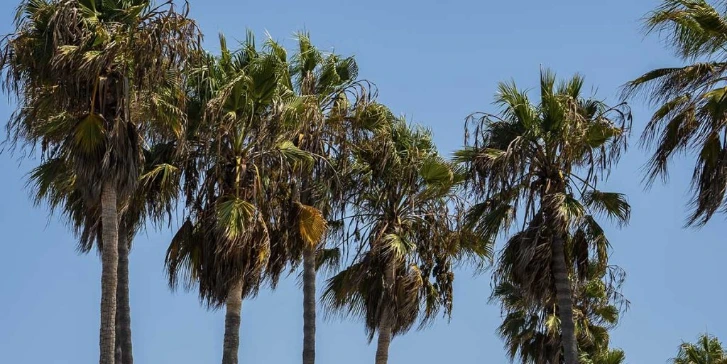
Species selection is one of the most consequential decisions you’ll make as a palm owner. For smaller residential lots, queen palms and pindo palms offer a manageable look without the scale issues of a towering Mexican fan palm. Date palms deliver strong visual impact but require more cleanup around patios and water features. You can explore different palm tree types to find the best match for your space.
Planting and Establishment in Arizona Soil
Proper planting helps palms establish stronger roots from the start. Set the root ball slightly above the surrounding grade so that water drains away from the trunk, and dig the hole wide enough for the roots to spread into the native soil.
Soil drainage should also be checked before planting. Fill the hole with water and watch how quickly it clears. Slow drainage can create soggy root zones and increase the risk of root rot, especially in compacted Phoenix soil.
Proper Watering for Phoenix Palms
No practical palm tree care guide would be complete without addressing watering, as this is where many Phoenix homeowners make mistakes. Deep, infrequent irrigation reaches the root zone more effectively than shallow watering, which only wets the surface and encourages weaker roots.
Palm Tree Fertilization
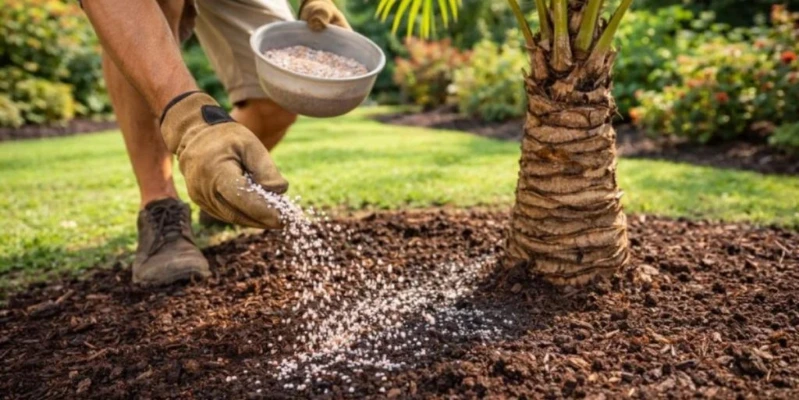
Phoenix’s alkaline soils create nutrient challenges that water alone cannot solve. Palm tree fertilization should occur two to three times per year with a specialized palm fertilizer formulated to address common desert nutrient deficiencies. Yellowing or spotted older fronds often signal potassium or magnesium deficiency, while scorched or curling new growth can indicate a manganese issue.
Pruning Dead Fronds the Right Way
The standard guideline is to remove only fronds that have turned completely brown and hang below the canopy’s horizontal plane. Green fronds are still photosynthesizing and supporting the tree’s health, so removing them does real harm. Avoid hurricane cut, which strips so many fronds that only a tight cluster remains at the top.
Pest and Disease Management
A few common pest and disease concerns may require closer attention:
- Fusarium wilt: A fatal fungal disease that affects Canary Island date palms and spreads through contaminated pruning tools. There is no cure, so clean pruning tools and proper sanitation are important for reducing spread.
- Palm weevils: Beetles that bore into the trunk and can kill a palm from the inside. Regular visual inspections of the trunk give you the best chance of identifying infestations before they advance.
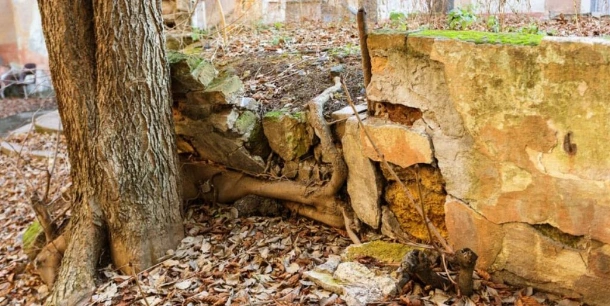
- Root rot: Most common in poorly drained or overwatered areas, often going undetected until the palm shows serious decline.
- Spider mites: These insects thrive in dry, dusty conditions. Periodically rinsing fronds with water helps keep populations under control.
Consistent monitoring and good cultural practices are the most reliable long-term defense.
Caring for Poolside Palms
Palms planted near pools are another issue, since these specimens often require more consistent upkeep. Dead fronds hanging over swimmers and debris falling into the water can pose safety and maintenance concerns when not managed regularly. Trim poolside palms before fronds become heavy, and keep the canopy accessible for future maintenance.
Warning Signs Your Palm Needs Professional Help
Some situations go beyond what a homeowner can safely handle. Watch for these warning signs:
- Leaning trunk: A palm that has begun to tilt after a storm or during establishment may have a compromised root system.
- Discolored or distorted new growth: Problems at the crown are serious because the growing tips cannot regenerate if damaged.
- Soft spots on the trunk: Dark or soft areas on the bark can indicate internal rot or active pest damage and warrant immediate inspection.
These are situations where DIY intervention can easily make things worse.
Elite Tree Service Is Here To Help Phoenix Homeowners
A reliable palm tree care guide is your best tool for keeping Phoenix palms healthy and safe through every season. At Elite Tree Service, we provide professional tree care to help homeowners manage palm health before small issues become larger problems.
If you’re unsure whether your trees need attention, learn more about when to call a tree professional before small issues grow into larger ones. Call us at (480) 386-1196 to schedule your consultation in Phoenix today!